
What is Competitive Intelligence? A Beginner's Guide to Smarter Decisions
Clura Team
Competitive intelligence (CI) is the ethical process of collecting and organizing public information about your competitors and the market to build a winning game plan. Think of it like a sports team watching game film of their biggest rival — they aren't cheating; they're studying plays, looking for weaknesses, and predicting the other team's next move.
It's all about turning the noise of public data into a crystal-clear roadmap for making smarter, faster business decisions. The global CI market hit an estimated $8.2 billion in 2023 and is projected to more than double to $16.8 billion by 2030. This guide explains what CI really means, how to build a CI process, and where to find the best competitive data.
Automate Your Competitive Intelligence in Minutes
Clura's AI browser agent turns competitor websites, job boards, and review sites into structured spreadsheets with one click — no code required. Build your CI program today.
Add to Chrome — Free →What Is Competitive Intelligence Really
Competitive intelligence is the systematic, ethical collection and analysis of publicly available information about competitors — from pricing pages and job postings to customer reviews and social media — to build a proactive, data-driven business strategy.
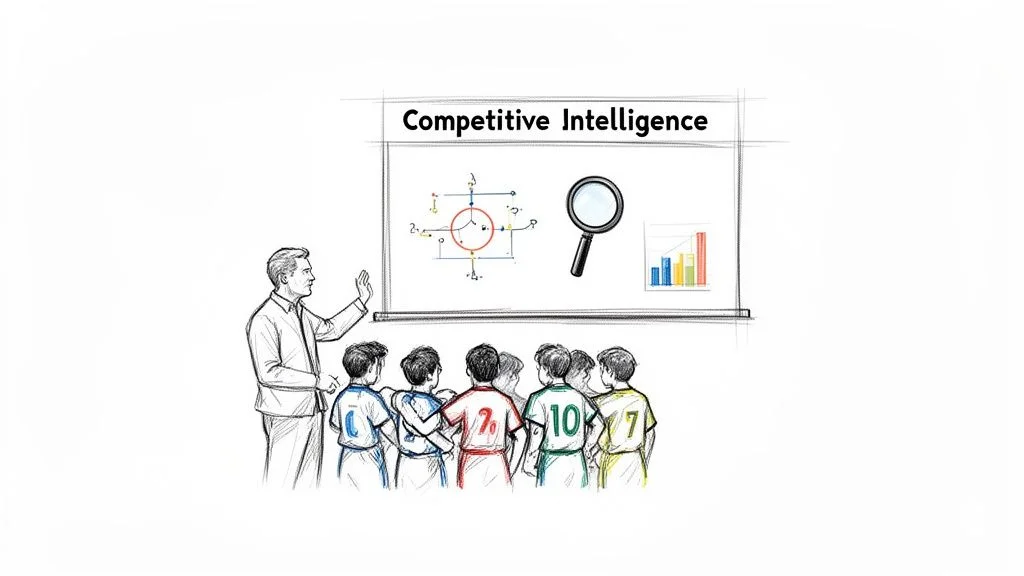
CI is the flashlight that illuminates your strategic blind spots. It helps you understand not just who your competitors are, but how they think, what their customers love, and where they're dropping the ball. This isn't some secret spy operation — it's about systematically collecting intel from places everyone can see if they know where to look:
- Company Websites — digging into their product pages, pricing tiers, and recent blog posts.
- Social Media — keeping an eye on their announcements, customer conversations, and the campaigns they're running.
- Job Postings — a goldmine; hiring trends often signal a company's next big strategic push.
- Customer Reviews — hearing directly from their users about what works and, more importantly, what doesn't.
| Core Component | Simple Explanation | Key Outcome |
|---|---|---|
| Competitor Profiling | Understanding a rival's strengths, weaknesses, and strategies | Anticipate their next moves and identify differentiation opportunities |
| Market Analysis | Tracking industry trends, customer behavior, and emerging tech | Spot market shifts early and adapt your strategy to stay relevant |
| Product Intelligence | Analyzing competitor products, features, pricing, and user feedback | Build a stronger product roadmap and more compelling value propositions |
| Strategic Intelligence | Monitoring partnerships, funding, and M&A activity | Understand long-term threats and opportunities for business growth |
Competitive intelligence isn't about hoarding data. It's about building a real, sustainable advantage by consistently out-thinking, out-maneuvering, and out-performing the competition.
Why Competitive Intelligence Is Your Secret Weapon
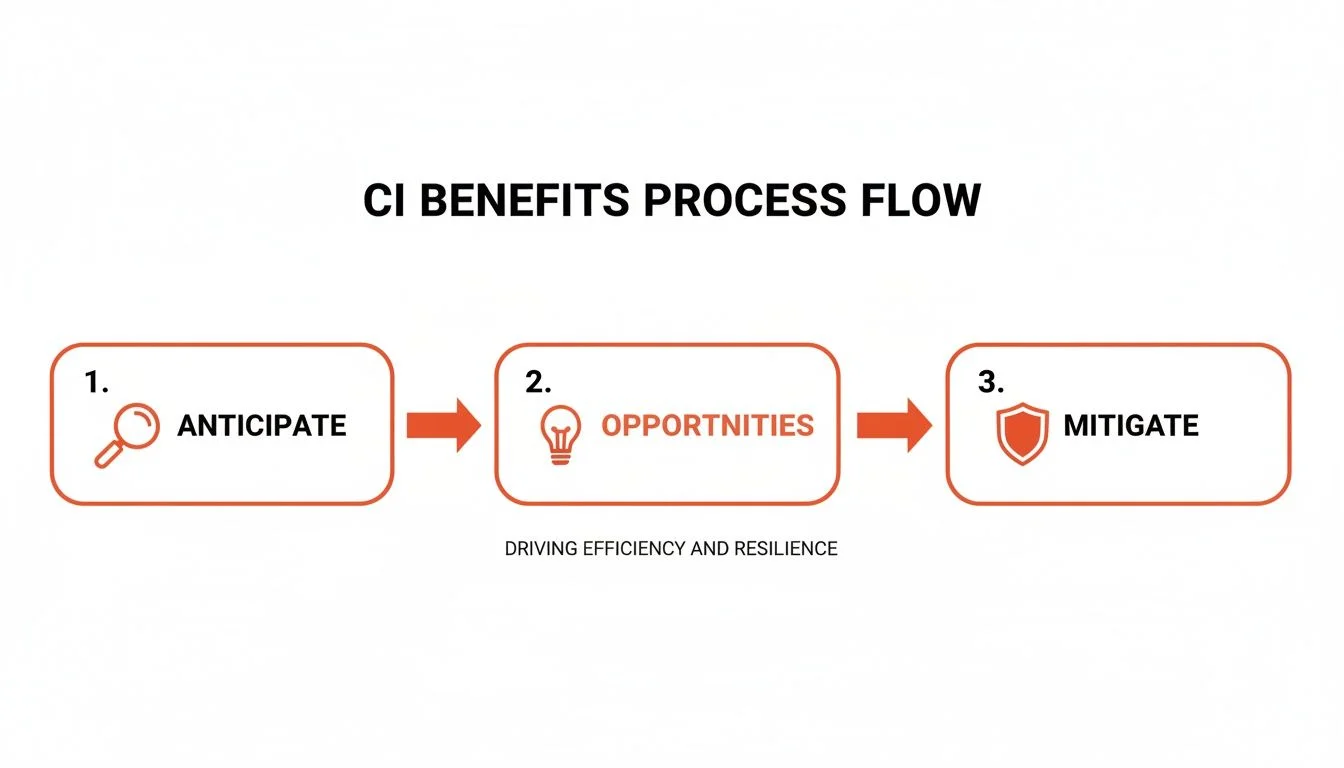
Competitive intelligence shifts your posture from reactive to proactive — instead of scrambling to match a competitor's move, you anticipate it and shape the competitive landscape before they act.
So many companies get CI wrong. They see it as a way to play catch-up — monitoring rivals just to copy a feature or match a price. That's a race to the bottom. The real magic of CI is flipping that script. Armed with the right insights, you can figure out what customers need before they even know it, find untapped market segments, and build a brand that means something unique.
- Anticipate Market Shifts — monitor industry trends and competitor actions to prepare for changes in customer demand before they impact your bottom line.
- Identify Untapped Opportunities — dig into competitor weaknesses or overlooked customer complaints to reveal gaps and golden opportunities to innovate.
- Mitigate Potential Risks — see threats coming from a mile away — a new market entrant, a disruptive technology — giving you precious time to build a defense or pivot.
- Build Stronger Products — find where competitors' products fall short and use that intel to guide your product roadmap.
- Launch Smarter Marketing Campaigns — figure out what messaging resonates with your audience by seeing what works and what flops for rivals.
The goal isn't just to compete; it's to make the competition irrelevant. When you understand their playbook, you can write a winning strategy that forces them to follow you.
The Four Pillars of Modern Competitive Intelligence
The CI lifecycle has four pillars: Planning (define your key intelligence questions), Collection (gather raw data from public sources), Analysis (connect the dots to find the 'so what'), and Action (get insights to the right teams to drive decisions).
Pillar 1: Planning and Direction
Before you collect any data, you must know what you're looking for and why it matters. 'I want to know what my competitors are doing' is too broad. Get specific with Key Intelligence Questions (KIQs): What specific features are they pushing in their sales demos? What pricing terms are they using to seal enterprise deals? Which of their case studies get the most traction?
Pillar 2: Collection
Now it's time to gather the raw material from a huge range of public sources. Modern tools can automate much of the web scraping for you. A competitor's LinkedIn job postings are a goldmine — a sudden flood of openings for 'AI Engineers' tells you everything about their next big product push.
Pillar 3: Analysis
Raw data is just noise. Analysis is where you turn that noise into a clear signal — connecting the dots, finding patterns, and uncovering the all-important 'so what?' A SWOT analysis is a fantastic way to structure your findings and see the bigger strategic picture. A competitor dropping prices by 15% is a fact; figuring out whether it signals a funding event or customer complaints about pricing is analysis.
Pillar 4: Action
All the planning, collecting, and analyzing in the world is useless if it doesn't lead to a smarter decision. Package your findings in a way that's simple to digest: battlecards for the sales team highlighting competitor weaknesses, a summary report on user complaints for the product team, and a quarterly briefing on long-term market shifts for leadership.
Where to Find Gold: The Essential Data Sources for Competitor Insights
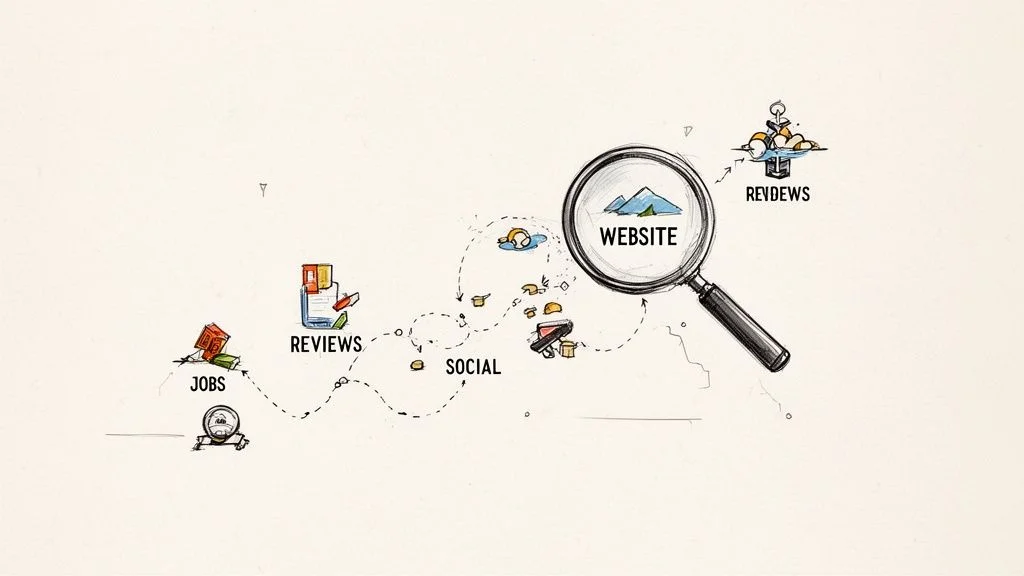
The richest competitive intelligence comes from four free public sources: competitor websites (pricing and product strategy), social media (brand messaging and customer sentiment), review sites like G2 and Capterra (product weaknesses), and job boards (future strategic priorities).
A Competitor's Website Is Their Playbook
- Pricing Page Moves — any tweak to their pricing, plans, or feature bundles reveals their go-to-market plan.
- New Case Studies — a literal 'who's who' of their recent wins, revealing which customers they're closing.
- Blog & Resource Hubs — the topics they write about signal their content strategy and what they believe is important.
- 'About Us' & 'Careers' Pages — offer a glimpse into their culture, mission, and long-term vision.
Social Media: The Unfiltered Truth
Platforms like LinkedIn, X, and Reddit are pure gold for monitoring brand messaging, campaign performance, and customer sentiment. For measuring this at scale, our guide on social media sentiment analysis tools is packed with practical approaches. Don't just follow official company accounts — follow key employees on LinkedIn for insider views of real priorities.
Review Sites: The Voice of the Customer
Sites like G2, Capterra, and Trustpilot deliver brutally honest, no-holds-barred feedback. If dozens of reviews all scream about a clunky UI or a missing integration, that's not just a complaint — it's a massive, flashing opportunity for your sales and marketing teams.
Job Postings: A Crystal Ball for Future Strategy
- A flood of 'Enterprise Sales Directors' in Europe? They're making a big push across the pond.
- Hiring a team of 'Machine Learning Engineers'? They're baking AI into their product.
- A new 'Partnership Manager' role focused on Salesforce? They're doubling down on that integration.
| Data Source | Types of Intelligence Gathered | Example Use Case |
|---|---|---|
| Company Website | Pricing strategies, product features, target customer profiles | Track new case studies to understand which industries a competitor is winning in |
| Social Media | Brand messaging, campaign performance, customer sentiment | Analyze a rival's most engaging posts to refine your own content strategy |
| Review Sites | Product weaknesses, support issues, key feature requests | Use G2 reviews to identify a competitor's most-requested feature and prioritize it in your roadmap |
| Job Boards | Strategic priorities, tech stack, expansion plans | Notice a competitor hiring for a new market and proactively develop a plan to defend your share |
Putting Competitive Intelligence into Action
CI delivers tangible wins for sales reps (tailoring demos to competitor weaknesses), marketers (pivoting campaigns to outcomes over features), and e-commerce managers (reacting to price changes with creative bundles instead of destructive price wars).
How Sales Teams Win More Deals with CI
A sales rep, Sarah, extracts the latest customer reviews for her biggest competitor from G2 and Capterra. A clear pattern emerges: customers constantly complain about the competitor's clunky interface and slow support. Armed with this knowledge, Sarah tailors her demo — leading with her product's beautiful, intuitive design and award-winning 24/7 live support. She closes the deal not on price or features, but because CI let her pinpoint the prospect's exact pain.
How Marketers Uncover Winning Angles
Ben, a marketing team lead, uses CI to dissect a rival's recent successful campaign. He quickly spots that their most successful ads weren't about technical specs — they were about one powerful outcome: 'saving finance teams 10 hours a week.' Ben pivots his entire campaign to be outcome-obsessed, landing on a new headline: 'Close Your Books in Half the Time.' The campaign pulls in a 30% increase in qualified leads. For the right tools, exploring the best competitor analysis tools is a great starting point.
How E-Commerce Managers Stay Ahead of Price Wars
Maria, an e-commerce manager, sets up automated price monitoring for her top 10 competing products. One morning, an alert hits her inbox: her biggest competitor just slashed the price on a best-selling camera by 15%. Instead of getting sucked into a price war, she launches a limited-time bundle pairing the camera with a must-have accessory. This move not only keeps her competitive but actually increases her average order value while protecting her profit margins.
How to Build Your CI Program from Scratch
Start a CI program in three steps: define your Key Intelligence Questions, identify 3–5 competitors across direct, indirect, and aspirational categories, then choose an automated tool to handle the data collection so your team can focus on analysis and action.
Step 1: Start with Your Burning Questions
Before you think about tools, grab a pen and paper. Write down your Key Intelligence Questions (KIQs) — the make-or-break questions that, if answered, would have a genuine impact on your business right now. How are your top three competitors pricing their enterprise plan? What are their customers really complaining about on G2? Are they hiring for roles that hint at a strategic pivot?
Step 2: Identify Your Top Competitors
Pick three to five key competitors to watch closely. A good list will have: Direct Competitors (they sell a similar product to your exact audience), Indirect Competitors (they solve the same problem with a different approach), and Aspirational Competitors (the big players whose playbook can provide a roadmap for your growth).
Step 3: Choose Your Tools Wisely
A browser-based AI agent like Clura can be the engine of your CI strategy. Instead of hiring a dedicated analyst or getting bogged down in code, use a simple browser extension to scrape data from any website in one click. Complex data from pricing pages, job boards, or review sites gets instantly turned into a clean, structured spreadsheet. Many teams can jumpstart their CI efforts by exploring powerful market research tools for startups.
By automating data collection, you free up your team to focus on what truly matters: connecting the dots and turning insights into action.
Frequently Asked Questions
Is competitive intelligence legal and ethical?
Yes, 100%. Ethical competitive intelligence is all about gathering and analyzing information that's already in the public domain — company websites, official press releases, social media activity, product reviews, and job postings. What it is not is corporate espionage. Illegal activities like hacking, stealing private documents, or anything shady have no place in a real CI program. The golden rule: if the information is public, it's fair game. Respect website terms of service.
How is CI different from market research?
Market research gives you the big picture — the overall industry, customer demographics, and broad market trends. Competitive intelligence zooms in on the specific moves, strategies, and capabilities of the other players on the field. Market research might tell you that 70% of your target audience wants a new feature; CI tells you your biggest rival just launched that exact feature last Tuesday. You need both, but CI delivers the tactical intel to win head-to-head moments.
How often should I be doing competitive intelligence?
Competitive intelligence isn't a 'set it and forget it' task — it's a living, breathing process. A big-picture report every quarter is a solid starting point for overall strategy. But the real competitive edge comes from having a constant, real-time pulse on the market. For fast-moving intel like a competitor's price drop or a new marketing blitz, you should be on top of it weekly, if not daily. This is where automation tools become your best friend.
What are the best free sources for competitive intelligence?
The richest free sources are: competitor websites (pricing, product pages, blog content), LinkedIn (job postings, company updates, employee activity), G2 and Capterra (customer reviews revealing product weaknesses), and Google Alerts for brand and competitor mentions. Combining these free sources with an AI browser tool to automate data collection gives you a comprehensive CI program at minimal cost.
Conclusion
Competitive intelligence transforms how you make decisions — replacing 'I think' with 'I know.' By systematically planning your questions, collecting public data, analyzing it for patterns, and acting on the insights, you build a proactive, data-driven organization that shapes the competitive landscape rather than just reacting to it.
Start small: pick three competitors, define five Key Intelligence Questions, set up one automated monitoring workflow with a tool like Clura, and schedule a monthly review meeting. The compounding advantage from consistent CI practice is one of the highest-ROI investments your team can make.
Explore related guides:
- Best Competitor Tracking Tools —
- Best Competitor Analysis Tools —
- Market Research Tools for Startups —
Turn These Insights into Your Secret Weapon
With Clura, you can build a powerful, always-on competitive intelligence program in minutes, not months. Automate data collection from any website and start making smarter decisions today.
Add to Chrome — Free →About the Author